The Little Mermaid: The Impact of Schools on Suppressing the Voice of Minority Students
As I contemplated what topic to research for my teacher leadership course, I reflected on my own school experience. At first glance, I look at my educational journey in a positive light; I had family support, I got good grades, I attended good schools, made friends. But it wasn’t until my fifth year of therapy that I uncovered the memories of school I had pushed to the back of my mind for years.
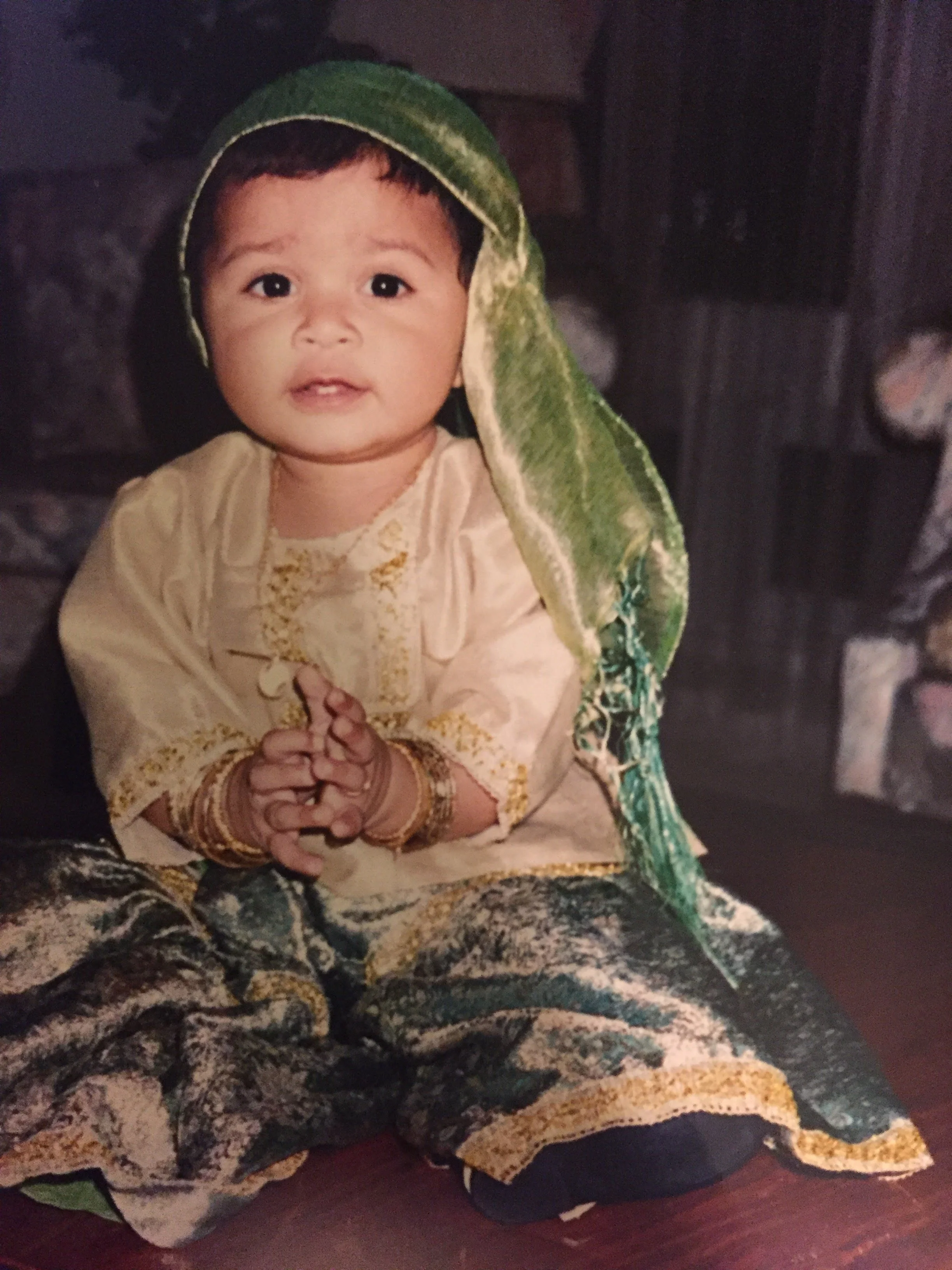
This is a picture of baby Sayema after partying hard on her first birthday. With her father being a diplomat at the time, she lived in a big house with a maid, a gardener, a chef, and a driver. She attended a British school with people from all over the world, many of whom looked like her. And boy, was she a yapper. She approached any and everybody, would talk your head off, and could convince anyone to play with her. She would make some moms upset because they would find their sons playing dolls with her when they would leave them alone. She moved with confidence and a sense of humor with a strong grip on her identity-building process. However, things changed drastically when she moved back to America in time for Kindergarten.
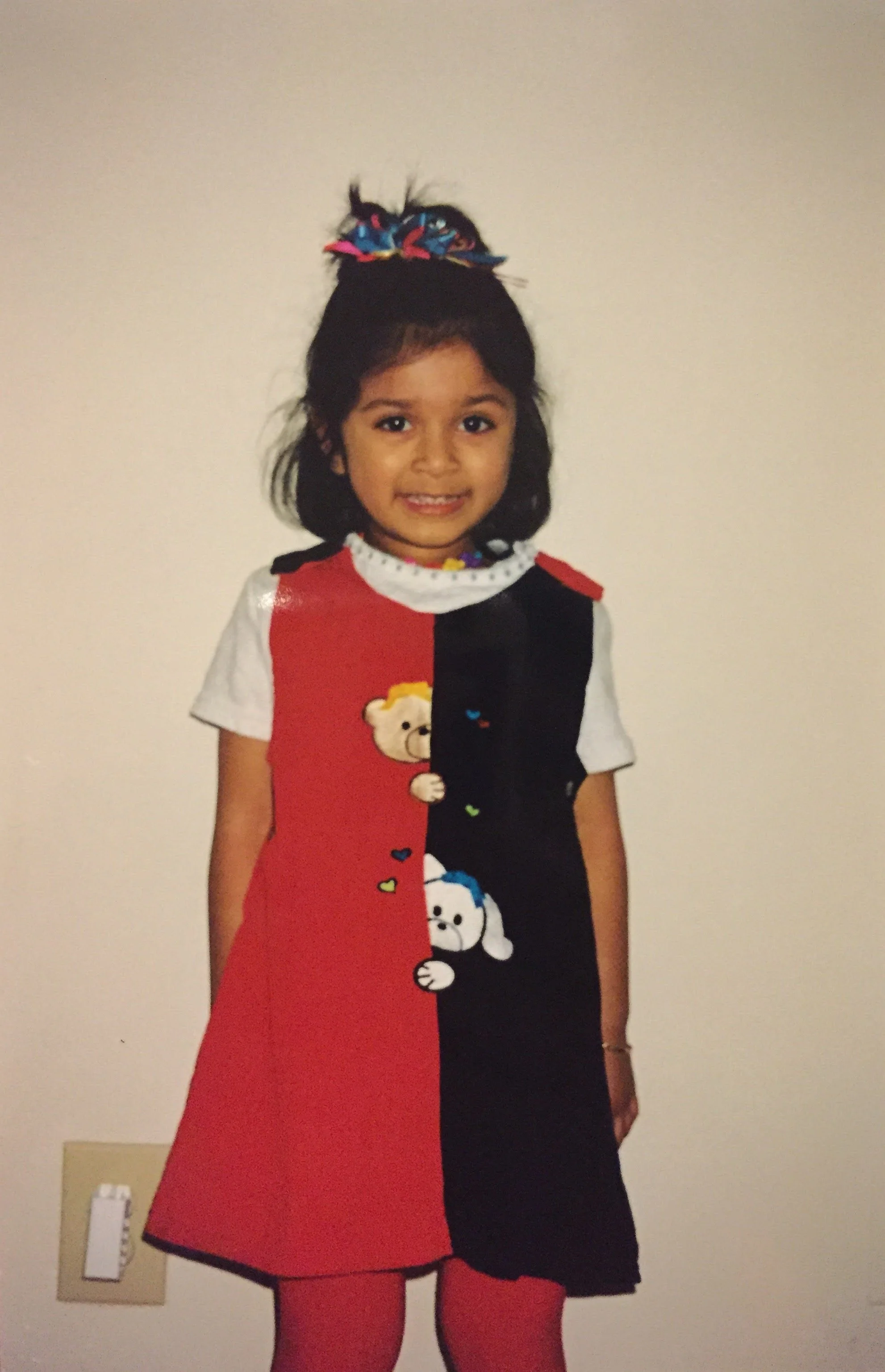
School in the states was much different. The classrooms nor the staff were as diverse, but at the young age of three, Sayema just went with the flow, accepting that this is how life is. She wasn’t called on often, other kids didn’t always want to play with her, and Sayema learned that to be accepted, it was better to make herself smaller by doing anything possible to not stand out. It got worse when she moved to private school for grade school, being one of a handful of students of color in a sea of beige.
Although she was miles ahead of her classmates academically, Sayema never participated. She became so mute in class that she would ask a classmate to ask the teacher if she could have permission to go to the bathroom. In therapy I suddenly remembered a time when I was staring out the window because I had finished my math work early. My teacher berated me in front of the entire class for “daydreaming” and brought my parents in for a conference regarding my behavior.
I hadn’t made myself small enough.
Fast forward to fourth grade, I remember having my henna done for Eid over the weekend, and coming into class on Monday for a group reading of a book. As I sat with my head down on the carpet, my teacher yelled at me for drawing on my hand with a marker. She sent me to the bathroom to scrub off the markings, and so I went to the bathroom, turned the water on and cried in the mirror while I scrubbed, half hoping that maybe this time I could scrub the henna stain off knowing that that’s not how it works.
As a math teacher and leader, I spend hours diving into research around education and mathematics instruction. Research consistently shows that participation in academic discourse predicts student success (Gomez, 1995) and exclusion from discourse follows predictable patterns rooted in racism and cultural misalignment (Valoyes-Chavez, 2018). These practices reveal a pattern that shows how participation in discourse becomes a reflection of identity and belonging rather than academic ability. The research by Valoyes-Chavez shows that students of color receive fewer opportunities to speak than their white peers, less scaffolding, and less validation (2018). T.M. Childs takes this further and documents how teachers’ racial bias, whether implicit or explicit, shapes who gets called on, how long a teacher waits before redirecting, and whether partial answers are pressed for elaboration or dismissed (2025).
The impact isn’t only during instruction, however. The tone of feedback and daily microinteractions between teachers and students can either build or erode students’ academic identities over time (Bieler, 2018). For underserved students already contending with implicit bias and histories of marginalization, these moments are part of the relational infrastructure on which participation depends. Diminishing a child’s voice over time decreases how much they believe they are permitted to contribute to and uphold our democracy. Not only does it impact their academic success, but it impacts their standing in society and their own perceived power. If this was my experience as a privileged Bangladeshi-American, I can’t imagine what it must be like for black, Latino, and indigenous students who are systemically marginalized in almost every academic (and non-academic) space I can imagine.
Denying students of color a safe space to develop identity and belonging and denying them the same access to classroom participation is white supremacy.
As a teacher and a brown woman who is loud in some spaces and still quiet in others, I am learning to detach my sense of identity and belonging from white supremacist ideologies. But I need to continue exploring my own biases to ensure I don’t further perpetuate racism in schools, I need to continue challenging myself and others to look inward, and I need to keep learning about myself and unlearning the things that led me to believe minimizing myself was the key to success.
References
Bieler, D. (2018). The power of teacher talk: Promoting equity and retention through student interactions. Teachers College Press.
Childs, T. M. (2025). Exploring racial equity in education: The impact of teacher racial bias on student–teacher relationship quality and the opportunity for school social workers. Children & Schools, 47(2), 89-99
Gomez, A. M. (1995). When does a student participate in class? Ethnicity and classroom participation.
Valoyes-Chávez, L. (2018). Racism and mathematics education in a racial democracy: Views from the classroom. In Inside the mathematics class: Sociological perspectives on participation, inclusion, and enhancement (pp. 167-189). Cham: Springer International Publishing.
